

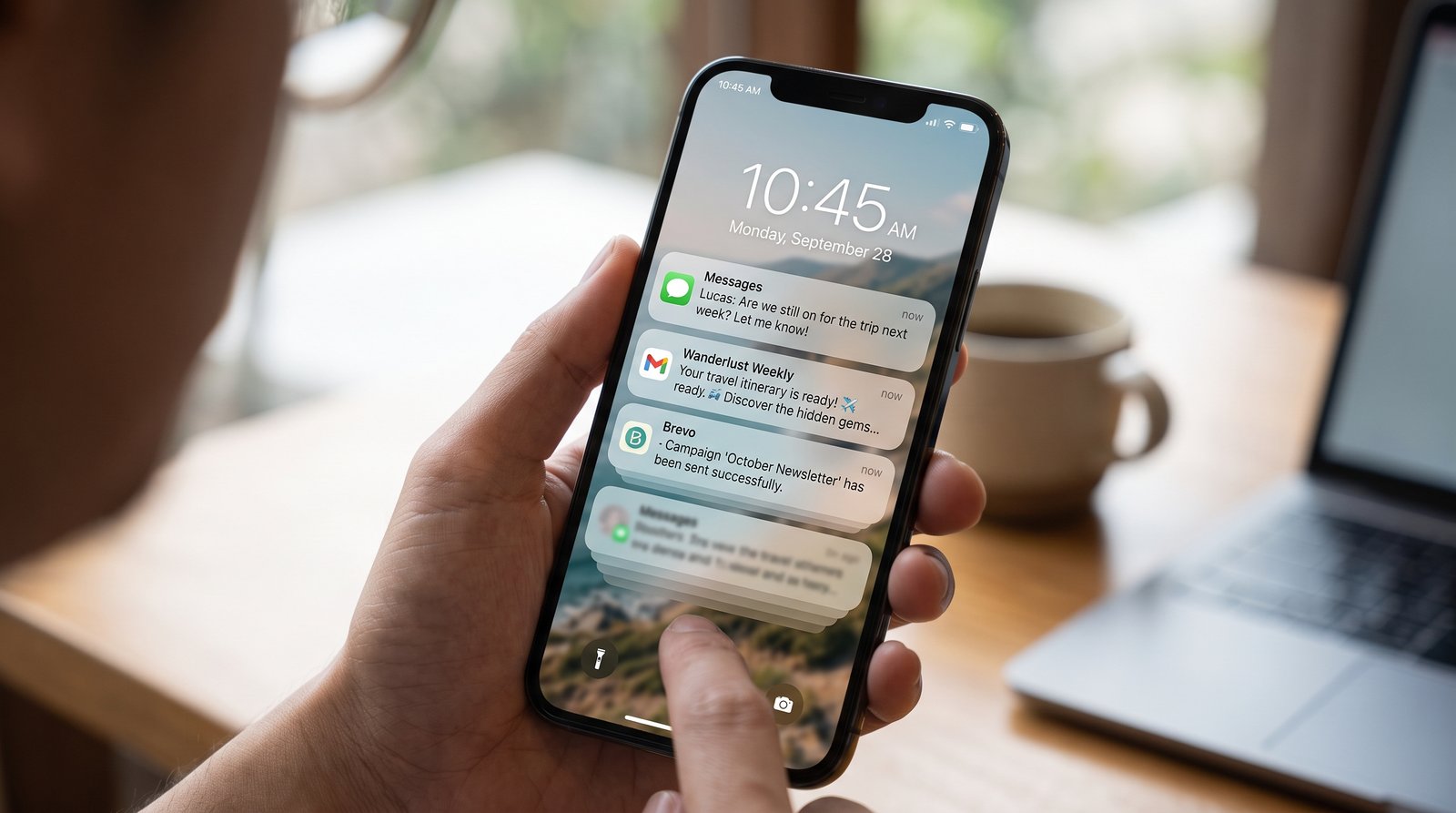
Travel customers expect fast, clear communication. But should you contact them by email, SMS, or WhatsApp? Each channel has strengths, and the best travel businesses use them together for different purposes.
Email: best for detail and deals
Email is ideal for anything customers need to read carefully or keep, such as booking confirmations, itineraries, and newsletters.
Strengths: Low cost, supports images and detailed information, easy to search later, and good for regular marketing.
Weaknesses: Can be missed in a busy inbox, and some emails land in spam.
Best uses: Booking confirmations, newsletters, deal alerts, review requests.
SMS: best for urgent updates
Text messages are read quickly, often within minutes. That makes SMS perfect for time-sensitive information.
Strengths: Very high read rates, works on any phone without internet, and ideal for urgent alerts.
Weaknesses: Costs more per message than email, limited length, and customers may find frequent marketing texts annoying.
Best uses: Flight changes, check-in reminders, last-minute seat availability.
WhatsApp: best for conversation
Many travellers, especially those visiting family abroad, already use WhatsApp every day. It works well for personal, two-way communication.
Strengths: Familiar to customers, great for questions and sharing documents, and feels personal.
Weaknesses: Business messaging rules are strict, bulk marketing is limited, and managing many chats takes staff time.
Best uses: Answering booking questions, sending tickets, customer support.
How to combine them
A strong communication plan might look like this:
- Email sends the booking confirmation and itinerary.
- SMS sends a check-in reminder 24 hours before departure.
- WhatsApp handles any questions the customer has during the trip.
- Email sends a review request and future deals after they return.
Using one platform for more than one channel makes this easier. For example, Brevo supports both email and SMS campaigns from the same dashboard, so your contact lists stay in one place.
Respect customer preferences
Whichever channel you use, always get permission before sending marketing messages and make it easy to opt out. Ask customers how they prefer to be contacted when they book. Respecting their choice builds trust.
Final thoughts
No single channel is best for everything. Use email for detail and marketing, SMS for urgent updates, and WhatsApp for personal support. Together, they give customers a smooth experience from booking to return.