

Many travel businesses start a newsletter, send a few emails, and give up because nobody opens them. The problem is rarely the idea of a newsletter. It is usually the content, the timing, or the subject line.
Here is how to create a travel newsletter people look forward to receiving.
Decide what your newsletter is for
Before writing anything, decide what value you are giving readers. For a travel business, the most useful newsletters usually offer one or more of these:
Exclusive or early access to flight deals.
Practical travel tips, such as visa updates or baggage rules.
Destination ideas for upcoming holidays.
If every email is only "Book now," readers will stop opening them. Mix offers with genuinely helpful information.
Write subject lines that get opened
The subject line decides whether your email is read. Good travel subject lines are short, specific, and clear about the benefit.
Weak: "Our Monthly Newsletter"
Better: "Summer fares to Islamabad just dropped"
Weak: "Travel Update"
Better: "New UK passport rules to check before you fly"
Avoid all capital letters and too many exclamation marks, which look like spam.
Keep the layout simple
A good newsletter has a clear structure:
A short introduction of two or three sentences.
One main feature, such as the best deal of the month.
Two or three smaller sections, such as a travel tip or a destination idea.
One clear button, such as "See All Deals."
Your contact details at the bottom.
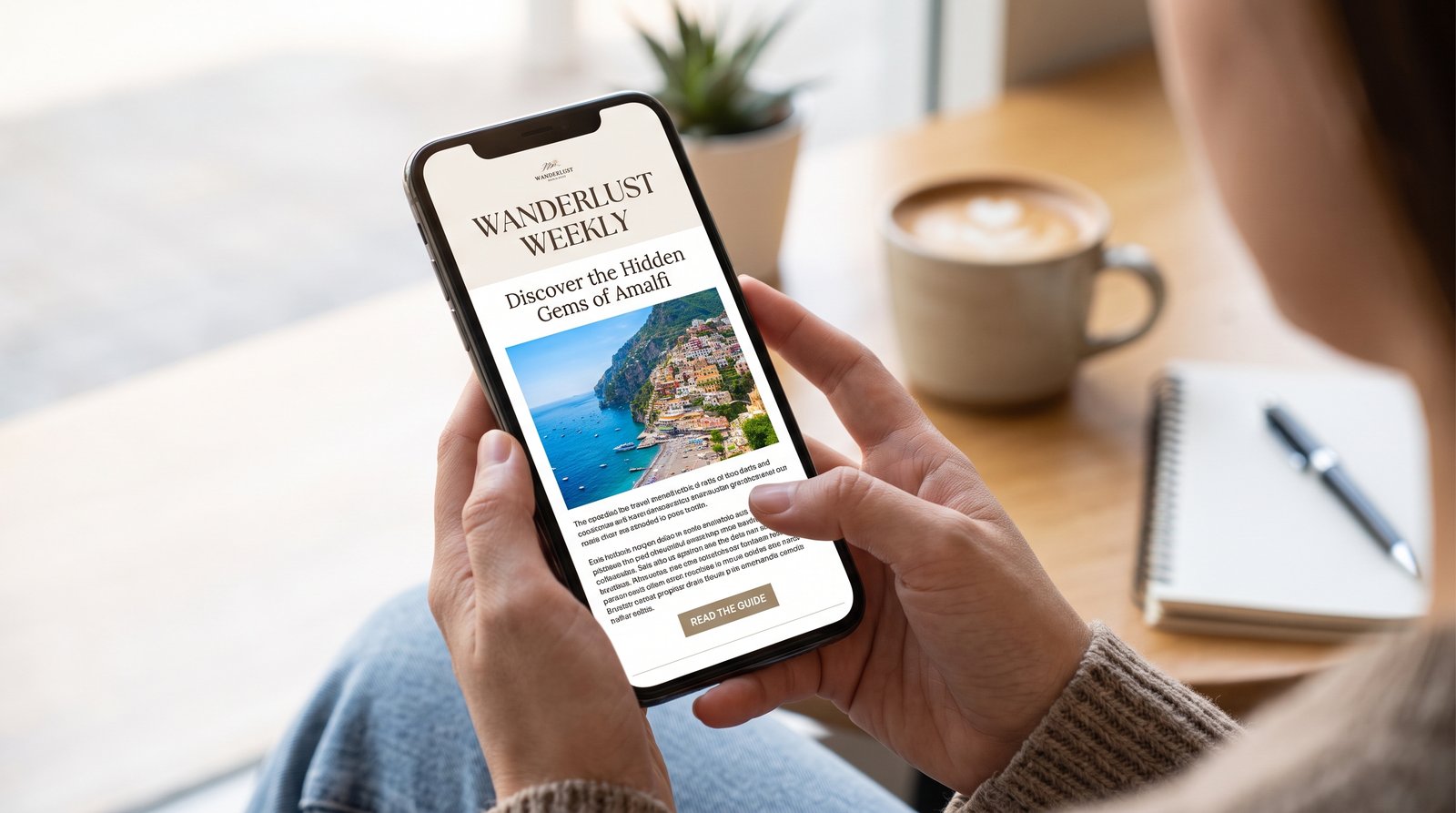
Most readers are on their phones, so use large text, short paragraphs, and images that load quickly.
Send at the right frequency
Sending too often annoys readers. Sending too rarely means they forget who you are. For most small travel businesses, once or twice a month works well, with extra emails before busy seasons.
Pick a regular day and stick to it so readers learn when to expect you.
Personalise where you can
Using the reader's first name is a good start, but real personalisation goes further. If you know a customer usually travels to Pakistan in summer, send them summer fares to Pakistan rather than general European deals.
Most email marketing platforms, including Brevo, Mailchimp, and MailerLite, let you group contacts by interests or past bookings so you can send more relevant content.
Check your results
After each newsletter, look at:
Open rate: how many people opened the email.
Click rate: how many people clicked a link.
Unsubscribes: how many people left your list.
If opens are low, test different subject lines. If clicks are low, make your main offer and button clearer. If unsubscribes rise, you may be sending too often.
Final thoughts
A successful newsletter feels like a helpful message from a travel expert, not an advert. Focus on value, keep it simple, send it consistently, and improve it based on your results.